
 Contact Us

Low Volume Appliance Manufacturing Methods and Processes


Table of Contents

Low Volume Appliance Manufacturing: From Design to Production
Low volume appliance manufacturing assists companies in manufacturing small volumes prior to investing in large production volumes. It is appropriate for new product releases, market testing, custom designs, and products whose demand is not certain. Teams do not need to invest in costly molds and bulk orders of parts; they can test production techniques with a smaller number of parts.
This method also assists engineers in detecting assembly errors, verifying material selection, and enhancing product quality prior to an increase in production. Before a kitchen appliance, air purifier, or smart home device attains its final form, it might require a number of design modifications. Those changes are easier to handle with small production runs. The appropriate process enables the manufacturers to manage costs, check quality, and prepare products to meet demand in the future without having to make more products than are required.
What is Low Volume Appliance Manufacturing?
Low Volume Manufacturing of Appliances implies the creation of a small number of completed parts or finished products. The precise amount is based on the design, materials, production process, and business requirements. There are projects that need few units and others that need hundreds or thousands of units.
- New products that Low Volume Home Appliance Manufacturing can promote are coffee makers, electric fans, vacuum cleaners, and kitchen tools. It is also applicable to replacement parts, expert appliances, and custom designs that do not require mass production.
- Small batches enable the manufacturer to inspect parts and processes before committing to larger quantities, as opposed to mass production. Teams can assess fit, finish, assembly time, and product performance with production-representative components.
In What Cases Should Appliance Makers Select Small Production Runs?
Small Batch Appliance Manufacturing is ideal when the demand is not known or when a product requires additional testing. It provides product teams the space to make adjustments to designs without necessarily ordering huge quantities of parts.
Common uses include:
- Pilot testing of a new design of an appliance.
- Manufacturing units to be used in customer trials and product demonstrations.
- Constructing special appliances in smaller markets.
- Ordering replacement parts that have been discontinued in small quantities.
- Checking assembly procedures prior to bigger production batches.
- Favouring tailor-made products of various sizes or finishes.
Selecting the Appropriate Manufacturing Process
The most appropriate method is based on the geometries of parts, material, finish, quantity, and the necessary accuracy. A project can adopt a single process or a combination of a number of methods.
Appliance Components CNC Machining
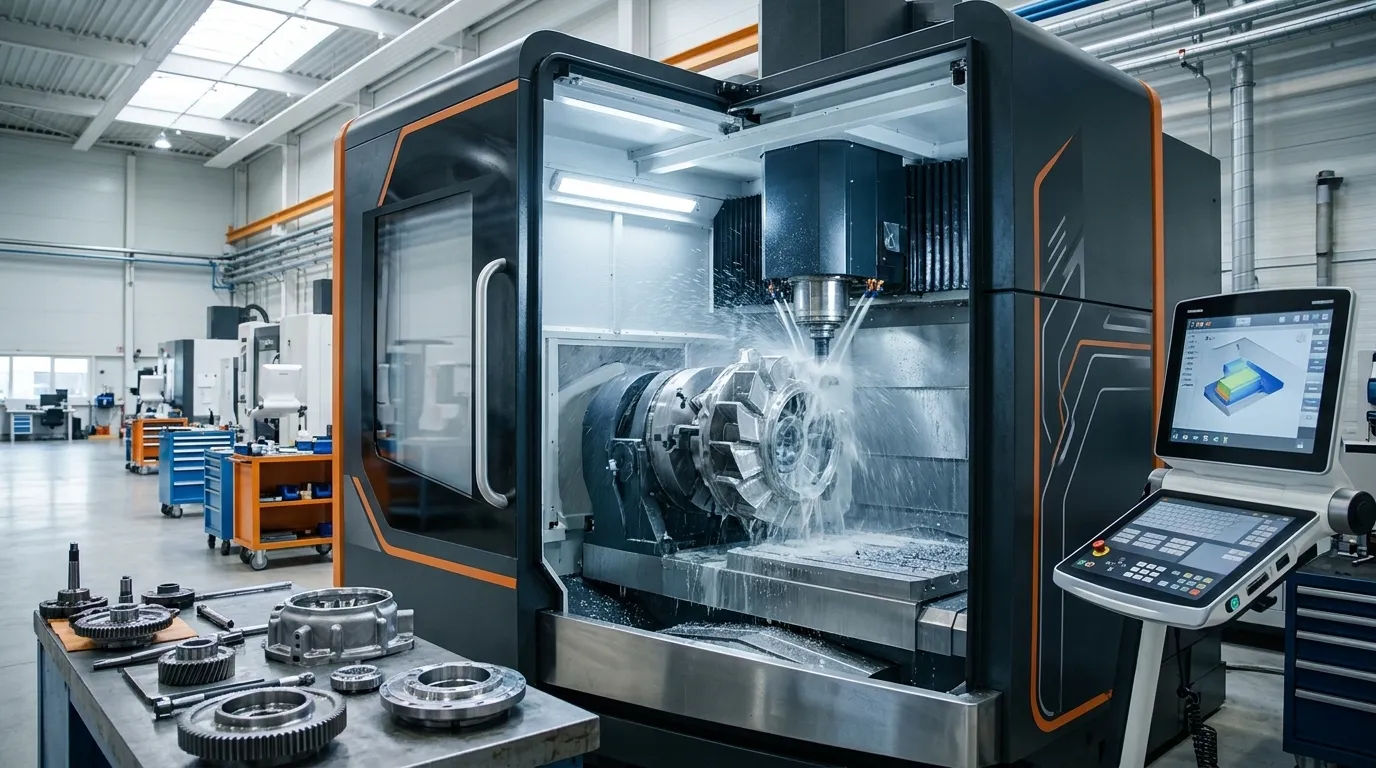
CNC machining is a subtractive process that involves cutting away plastic or metal stock with computer-controlled cutting tools. It fits housings, brackets, knobs, fixtures, and parts with accurate holes or mating surfaces.
They are commonly made of aluminum, stainless steel, ABS, polycarbonate, POM, and nylon. The selection is based on strength, heat exposure, wear, and dimensional requirements. Under controlled conditions, CNC machining can produce tolerances of about ±0.01 mm on appropriate features, though in practice, this is determined by material, geometry, and inspection needs.
Small-Batch Vacuum Casting
Vacuum casting involves the use of a master pattern and silicone mold to produce several parts of resin. It is applicable to appearance models, covers, handles, and housings that require a regular shape and surface detail.
The process facilitates various colors, textures, and hardness of materials. Nevertheless, silicone molds do not last indefinitely, and cast resins might not be comparable to the heat or strength characteristics of production thermoplastics.
Quick Tooling and Injection Molding
Injection molding involves heating plastic in a mold and letting it cool in the mold to assume the shape it needs. Rapid tooling offers a less-committed method of trying out molded components prior to committing to complete production equipment.
ABS, polypropylene, and polycarbonate could be suitable for various parts of the appliances. Engineers should check shrinkage, draft angles, wall thickness, and the location of gates and cooling. These influence part size, surface quality, and warping.
Fabrication and 3D Printing of Sheet Metal
Sheet metal fabrication is used to suit brackets, frames, panels, and appliance enclosures. Trial parts can be produced by laser cutting and CNC bending, without special stamping equipment.
3D printing is a process that creates components in layers based on a digital representation. It is effective for intricate shapes, initial design checks, and components that would be more time-consuming to machine. Printed material can be constrained by heat, stress, or repeated motion; therefore, choose it based on the purpose of the test.
The Appliance Making Process, Step by Step
An explicit workflow assists teams in transitioning between initial samples and repeatable production. Checks and points of approval should be established at each stage.
1. Check the design and requirements: Start with 3D CAD files, technical drawings, material needs, quantities, and critical dimensions. Determine characteristics that influence assembly, strength, safety, and appearance.
2. Complete design for manufacturing: Design for Manufacturing (DFM) examines the possibility of making parts consistently. Before production, engineers check the wall thickness, tolerances, fasteners, access, and material use.
3. Construct and test the initial components: Produce sample parts with the selected process. Approve the design by checking dimensions, surface finish, fit, and functionality.
4. Complete first-article inspection: Check the initial part completed against approved drawings and specifications. Note down any discrepancies and settle them out prior to preparing the entire lot.
5. Begin production run: Make the agreed quantity using the approved materials and process settings. Monitor key dimensions and maintain production data.
6. Complete, assemble, and test: Apply the necessary finish, assemble parts, and check depending on the requirements of the product. Approve packages to be delivered.
Cost, Quality and Lead Time Management
Small runs often have a higher cost per unit than mass production. Even with small quantities, setup, programming, material preparation, finishing, and inspection take time.
- Manufacturers are able to control costs by choosing appropriate materials, eliminating unnecessary design features, and assembling parts that are similar in process. They also ought to establish important limits instead of using very strict limits in all places.
- Low Volume Production Services can be a combination of CNC machining, vacuum casting, rapid tooling, injection molding, and sheet metal work. China Rapid Prototype outlines these options, as well as engineering review, first-article inspection, assembly, finishing, and quality checks, on its low volume production services page.
Conclusion
Small production batches provide appliance manufacturers with an effective method of testing their designs, quality control, and future production. The correct way to manufacture is determined by the materials, tolerances, quantity, finish, and anticipated demand. Early inspections and clear drawings are used to ensure that teams do not incur expensive changes in the future.
Call Yanmee and talk about your appliance design, desired quantity, material requirements, and production objective. Its team will be able to assist in evaluating appropriate manufacturing paths and getting your project ready for the next level.
- PREV: Null
- NEXT: Null
Talk to the Manufacturer, Not a Middleman
Resources & Insights
-
Blog
Household Appliance Prototyping Services: From Concept to Market-Ready Products
2026-10-26By -
 Blog
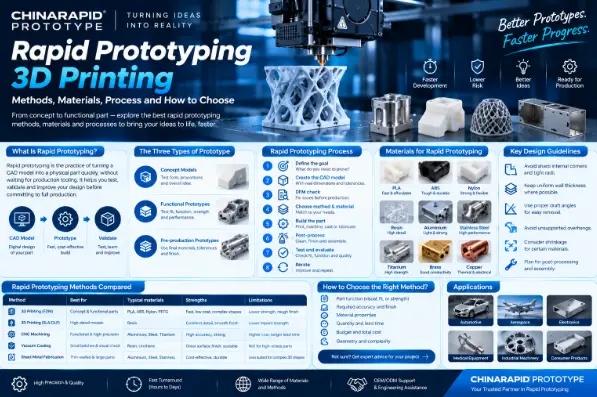
Rapid Prototyping 3D Printing- Methods, Materials, Process and How to Choose
2026-10-23By -
 Blog
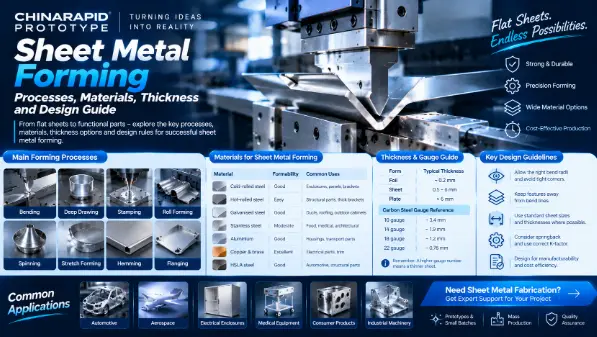
Sheet Metal Forming - Processes, Materials, Thickness and Design Guide
2026-10-23By -
 Blog
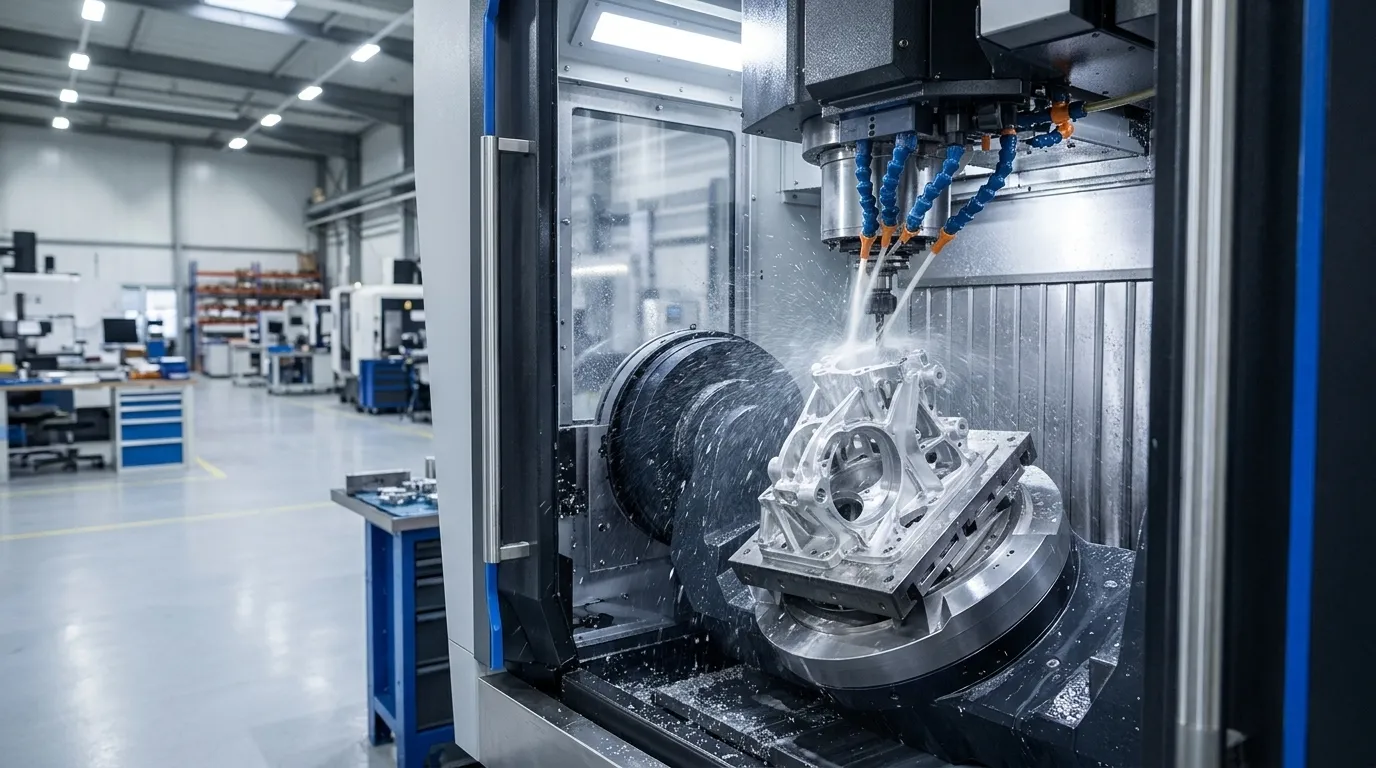
Low Volume Appliance Manufacturing Methods and Processes
2026-10-23By


