How do prototypes bridge ideas and manufacturing?
Household Appliance Prototyping
Accelerating Innovation
A practical guide to faster, smarter home appliance development.
01 Definition · 02 Value · 03 Methods
INDEX
PART 01
What is prototyping?
Scope and appliance coverage
PART 02
Why it matters
Design, performance, and speed
PART 03
Methods toolkit
CNC, 3D printing, casting
Bringing a new household appliance to market demands more than function; it calls for good looks, comfortable handling, connectivity, energy efficiency, and durability while still meeting aggressive timelines.
At Nice Rapid, we translate sketches and CAD files into high-quality, functional appliance prototypes that support every stage from proof-of-concept to pre-production runs.
What is household appliance prototyping?
OVERVIEW · Defining scope and objectives
Household appliance prototyping builds physical models that validate design, function, ergonomics, and manufacturability before mass production.
● Kitchen appliances
Blenders, kettles, coffee machines, food processors, toasters, air fryers
● Cleaning appliances
Vacuum cleaners, steam mops, robotic cleaners
● Personal care devices
Hair dryers, shavers, facial steamers, electric toothbrushes
● Climate & air treatment
Fans, portable ACs, air purifiers, humidifiers
● Smart & connected devices
Smart plugs, control panels, home automation hubs
By refining appearance or functional prototypes, teams reduce technical risk, gather actionable feedback , and optimize designs before investing in tooling.
Why household appliance prototyping matters
IMPACT · Driving decisions and speed
. CASE 01 Validate design and user experience Consumers expect intuitive appliances, making it essential to confirm usability, aesthetics, and perceived quality through hands-on prototypes.
• Check overall size, shape, and proportions in real space for spatial harmony .
• Validate button layouts, handle grips, and control interfaces to ensure comfortable interactions .
• Evaluate finishes and materials to capture the desired level of perceived quality .
• Improve ergonomics for varied users and environments, highlighting real-world comfort .
Only tangible models reveal details such as indicator visibility or hand placement that 3D renders might miss.
. CASE 02 Test performance and durability Functional prototypes confirm how appliances behave under realistic conditions, capturing motor performance, heat management, sealing, and noise data.
• Assess motors, fans, or pumps under load to validate target power curves .
• Stress-test sealing, ventilation, and heat paths for safety compliance .
• Measure noise and vibration to protect the intended user experience .
Appropriate material choices and integrated electronics ensure prototypes mirror regulatory expectations early.
. CASE 03 Reduce time to market and project risk Prototyping mitigates risk by uncovering issues before tooling, enabling rapid iteration and aligning teams around tangible samples.
• Spot design flaws early to avoid costly mold rework and protect capital expenditure .
• Use prototypes as shared reference points for marketing, engineering, and management stakeholders.
• Impress investors and customers with samples that demonstrate market readiness .
Household appliance prototyping methods we commonly use
METHODS · Matching stages and goals
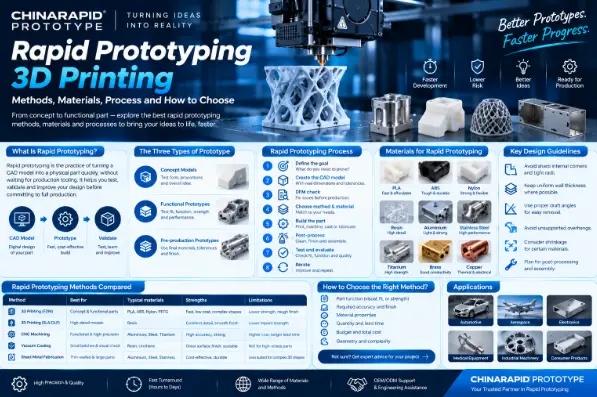
Each development phase benefits from different techniques, so we blend CNC machining, 3D printing, vacuum casting, and rapid tooling to suit your objectives.
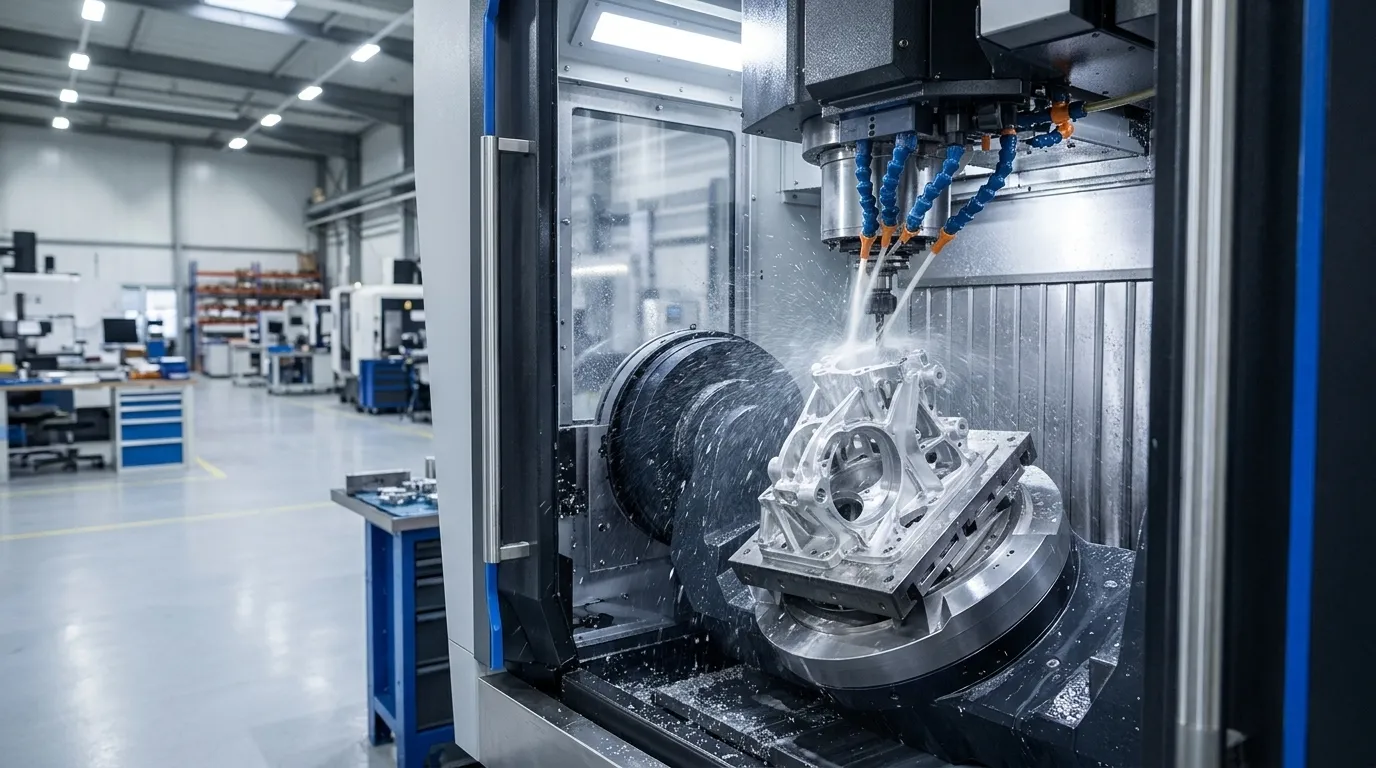
. TECH 01 CNC machining for high-precision parts Ideal for housings, frames, supports, and metal pieces requiring tight tolerances and structural performance.
• Achieve high dimensional accuracy and repeatability for engineering validation .
• Produce strong parts that withstand load testing in vacuum cleaners or air purifiers .
• Select from broad plastic and metal options for matching production-grade materials .
. TECH 02 3D printing for rapid iteration Additive processes speed concept validation, especially when exploring complex geometries or internal airflow channels .
• Iterate buttons, knobs, and casings to fine-tune ergonomic feedback fast.
• Use SLA or SLS for smooth surfaces that assemble into larger prototypes .
. TECH 03 Vacuum casting for short runs Silicone molds and polyurethane resins replicate master models, delivering injection-like surfaces for limited batches.
• Produce external parts ready for painting, texturing, and branding during market pilots .
• Explore multiple colors or finishes for coffee machines or humidifiers in real environments .
. TECH 04 Rapid tooling and injection molding Cost-optimized molds produce limited runs in production-grade materials like PP, ABS, PC, or PA for extended testing.
• Validate assembly processes, tolerances, and compliance readiness before mass production .
• Support pilot runs that simulate real-world use over longer duty cycles .
Typical household appliance prototyping workflow
PROCESS · From concept to iteration
Projects are unique, yet a structured workflow ensures smooth collaboration with clear checkpoints from evaluation to refinement.
. STEP 01 Concept evaluation and feasibility We review sketches, CAD, specs, and risks to recommend prototype types and methods that align with your product vision.
• Identify complexity and cost drivers early to support scalable manufacturing .
. STEP 02 Design for prototyping and manufacturability (DFM) Applying DFM principles ensures wall thickness, draft, parting lines, and features like snap fits or ribs support future production.
• Select materials with the right durability, heat resistance, and appearance for your target usage .
. STEP 03 Prototype fabrication Depending on goals and timing, we combine agreed methods to deliver housings, frameworks, mechanical parts, and mock-up electronics interfaces quickly.
. STEP 04 Finishing, assembly, and detailing Processes like sanding, painting, texturing, pad printing, and assembly ensure prototypes look and feel like market-ready appliances .
. STEP 05 Testing, feedback, and refinement Prototypes enable fit checks, user interaction validation, performance assessment, and stakeholder feedback, informing iteration loops until designs are ready for tooling.
Materials commonly used in household appliance prototyping
MATERIALS · Matching production intent
Choosing plastics or metals that simulate production parts delivers realistic appearance and performance during testing.
• ABS delivers versatile housings with reliable mechanical properties .
• PC offers high impact resistance and supports transparent components .
• PP resists chemicals and suits parts contacting water or food .
• PA provides strength and wear resistance for gears and moving parts .
• PMMA offers high transparency for windows and light covers that showcase premium aesthetics .
• TPE/TPU add flexible grips, seals, or protective elements with rubber-like feel .
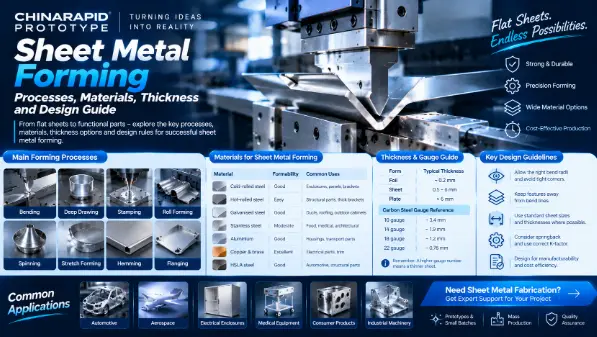
• Aluminum combines lightweight strength with efficient machinability for structural or heat-dissipating parts.
• Stainless steel resists corrosion, suiting components exposed to moisture or wear .
• Mild steel supports internal frames where rigidity and cost balance matter.
Key considerations when prototyping household appliances
FACTORS · Balancing safety, cost, and integration
. FACTOR 01 Safety and compliance Prototypes help explore enclosures, insulation, and ventilation tailored to regional certification requirements .
They allow temperature, strength, and protective feature testing that reduces certification surprises later.
. FACTOR 02 Cost and budget optimization Early prototypes highlight complex molds, high part counts, or material choices that drive cost, enabling architectural refinements .
Our cross-category experience supports balancing performance goals with target budgets .
. FACTOR 03 Integration of electronics and connectivity Modern appliances require careful PCB mounting, cable routing, ventilation, and antenna placement to maintain signal integrity and thermal control.
Prototypes ensure mechanical and electronic needs are reconciled before scaling to production tooling .
Who benefits from professional household appliance prototyping?
AUDIENCE · Serving diverse stakeholders
. PROFILE 01 Established appliance brands Global manufacturers rely on prototypes for new pipelines, regional adaptations, and design refreshes that demand cross-team alignment .
. PROFILE 02 Startups and innovators Emerging brands use prototypes to build credibility, verify market fit, and de-risk tooling while accessing industrial-grade capabilities without owning equipment.
. PROFILE 03 Industrial designers and engineering consultants Design teams rely on high-fidelity mockups and manufacturability insights to translate concepts into client-ready presentations and engineered solutions.
Why partner with Nice Rapid for household appliance prototyping?
ADVANTAGE · Proven expertise and continuity
. REASON 01 Experience across consumer categories Our broad work in plastic housings and functional components means we understand typical constraints and expectations in home appliance development.
. REASON 02 Integrated services from prototype to production support We offer rapid prototypes, rapid tooling, and low-volume molding, preserving knowledge across stages and reducing handoff friction .
. REASON 03 Quality-focused processes Dimensional checks, visual inspections, and assembly tests keep prototypes aligned with your design intent and engineering goals.
. REASON 04 Global collaboration capabilities We coordinate international shipping, communicate across time zones, and support iterative feedback cycles with progress updates throughout development.
How to engage household appliance prototyping services
ENGAGE · Collaborative onboarding
. STEP 01 Share your project requirements Provide CAD files, drawings, target materials, functional goals, timelines, budgets, and special needs so we can craft tailored proposals .
. STEP 02 Receive a feasibility review and quotation We share technical feedback, recommended methods, lead times, and cost breakdowns so you can align scope with development priorities .
. STEP 03 Prototype production and communication After confirmation, we begin fabrication, sharing updates on materials, dimensions, assembly fits, and finishing progress via photos or videos as needed.
. STEP 04 Delivery, testing, and iterations Test in your environment, request changes, plan for rapid tooling, or finalize designs, knowing we remain a long-term development partner .
Practical use cases of household appliance prototyping
USE CASES · Real-world impact
● New kitchen appliance launch
Refine handles, controls, and noise levels before tooling to secure user satisfaction .
● Vacuum cleaner design update
Test airflow, filter housings, and weight distribution to enhance usability .
● Smart home appliance integration
Align electronics, antennas, and thermal management to deliver reliable connectivity .
● Premium aesthetic upgrade
Validate textures and finishes through cosmetic prototypes that showcase brand differentiation .
FAQs: household appliance prototyping
FAQ · Addressing common questions
. FAQ 01 How long does it take to build a prototype? Lead times vary with complexity, size, and processes; appearance models may take days, while fully functional assemblies need weeks, and we supply schedules that match your project milestones .
. FAQ 02 Can you support cosmetic and functional prototypes? Yes, we create appearance models for design and marketing, then progress to functional engineering samples as designs mature, ensuring continuity across the development lifecycle .
. FAQ 03 What information do you need to start a quote? We typically need CAD files, target parts, preferred materials, testing or presentation goals, and production expectations to provide accurate proposals .
. FAQ 04 Can prototype housings be used for early field testing? CNC, vacuum casting, or rapid tooling parts are often robust enough for limited field tests, though material or process differences should be discussed to manage test expectations .
. FAQ 05 Do you keep project information confidential? We protect customer designs with internal policies and can operate under NDAs to maintain confidentiality throughout collaboration.
Conclusion: turn household appliance ideas into market-ready products
INSIGHT · From concept to launch
Household appliance prototyping transforms ideas into reliable, desirable products by leveraging CNC machining, 3D printing, vacuum casting, and rapid tooling to reduce risk, accelerate schedules, and enhance overall quality .
Whether you are an established brand, a startup, or a design consultancy, partnering with Nice Rapid delivers the expertise and continuity needed to move from concept to tangible, testable prototypes ready for production.
Share your next appliance concept with Nice Rapid and accelerate the journey to market-ready hardware.
Enjoyed the insights? Tap like, share, and follow for more appliance innovation stories.
THANKS FOR READING

 Contact Us


 Blog
 Blog
 Blog


