
 Contact Us

Household Appliance CNC Machining for Precision Parts


Table of Contents

Household Appliance CNC Machining: From Design to Production
Household appliances are based on components that fit, can be used on a daily basis, and can perform consistently. From washing machines to coffee makers, every product requires parts that are designed to fit its design and operating environment. Household Appliance CNC Machining assists manufacturers in producing these parts with the correct dimensions and consistent outputs.
China Rapid Prototype, via Yanmee, provides 3-axis, 4-axis, and 5-axis CNC machining, and turning and mill-turn. These capabilities assist in appliance prototypes, small-batch production, and production parts in metal and engineering plastics.
The Importance of CNC Machining in the Production of Appliances
Home appliances are a combination of moving components, structural frames, control systems, and heat-generating components. Every component will have to satisfy its size, strength, and fit needs. Inappropriate dimensions may lead to noise, vibration, leakage, or premature wear in normal use.
Precision Machining of Home Appliances assists engineers in managing these risks by making parts from approved CAD models. CNC machines operate on programmed tool paths, and this minimizes part-to-part variation when machines, tools, and work environments are held constant.
Common applications include:
- Motor mounts and drive system components of washing machines.
- Refrigerator shafts, fittings, and brackets.
- Pump housings and valve parts for dishwashers.
- Oven frames and supports made of metal.
- Blade mounts and motor brackets for blenders.
- Nozzles, fittings, and internal components of coffee makers.
These illustrations demonstrate that CNC machining helps with both structural and functional components. The optimal process is based on the shape, material, tolerance, and load of each component.
Selecting Materials to Be CNC Machined into Appliance Parts
The choice of material influences strength, weight, heat resistance, corrosion, cost, and machinability. The working conditions of a part should be checked by engineers before choosing a metal or plastic.
Popular material choices are:
- Aluminium alloys: Lightweight brackets, housings, and heat-transfer components. Grades like 6061 provide a good balance of machinability and strength.
- Stainless steel: Appropriate for components requiring corrosion resistance, such as selected fittings and wet-end components. Popular grades include 304.
- Carbon steel: It can be used in load-bearing components and shafts when cost and strength are important. Surface protection might be required to prevent rust.
- Plastic engineering: POM, nylon, and PEEK are used to make low-friction, electrical, or lightweight components. There are various heat and load limits for each grade.
- Brass: This material is easy to machine, and it is used in some connectors, threaded fittings, and fluid-control components.
Heat, moisture, cleaning agents, friction, and mechanical load are the factors that determine the correct decision. Engineers are also to verify material certifications and any food-contact or electrical safety regulations that may apply to the completed appliance.
Tolerances, Surface Finish and Quality
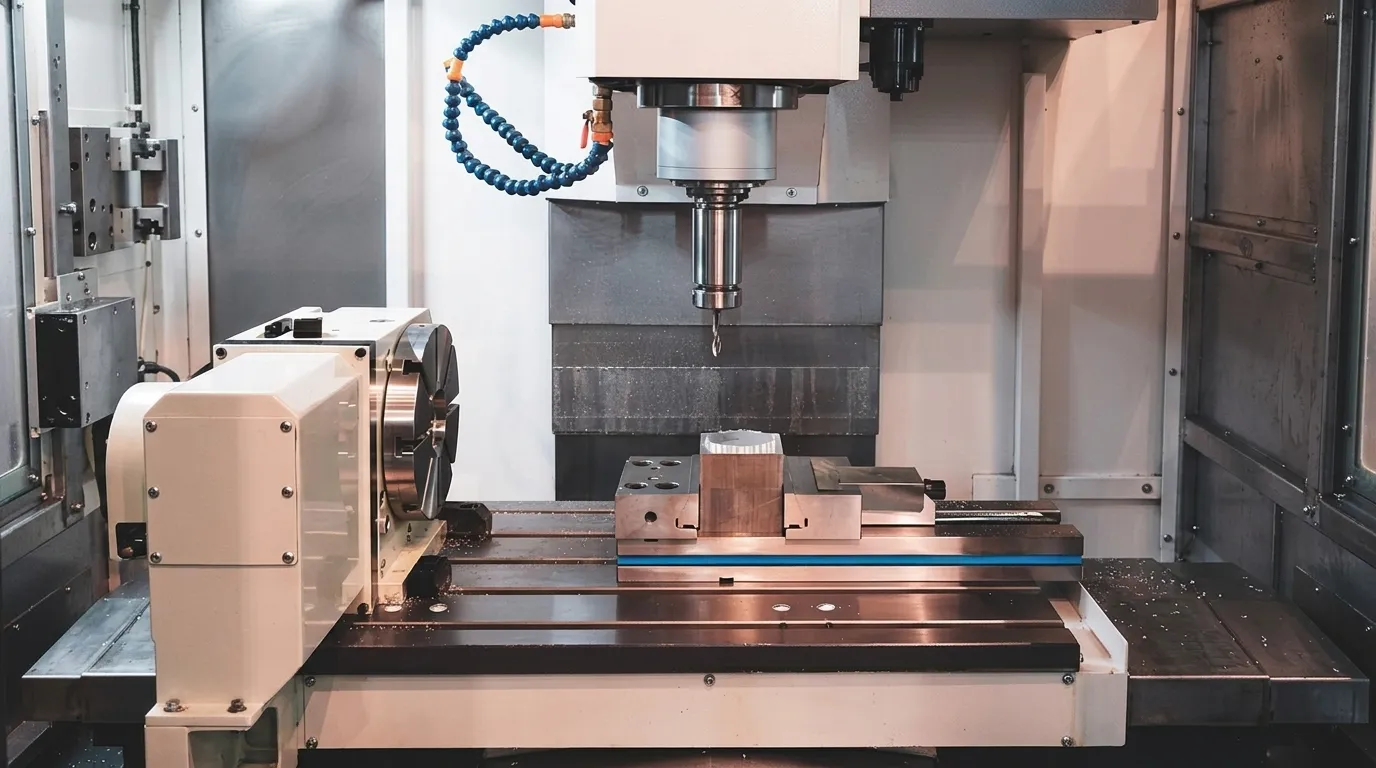
A component may appear right but fail during the assembly process when important dimensions are exceeded. Tolerances stipulate the deviation that is permitted on a given size. Tighter limits should only be established where necessary by the function of the product, as very tight limits may increase machining time and cost.
High-Precision Component Machining begins with clear drawings, appropriate datums, and realistic tolerance targets. Not all features and materials can be used with a general CNC tolerance. The supplier must verify realistic limits depending on part geometry, machine capacity, and tooling and inspection method.
Quality checks can involve:
- Calipers and micrometers to check common sizes.
- Complex features and positions: coordinate measuring machines (CMMs).
- Surface roughness testers to meet given finish specifications.
- Thread gauges and pin gauges for holes and threads.
- Burr, tool marks, and surface damage visual checks.
Performance is also influenced by surface finish. Roughness may cause friction or seal issues, and burrs can disrupt assembly. When the drawing or service conditions require it, deburring, polishing, bead blasting, anodising, or any other finishes may be applied.
Between Appliance Parts Prototyping and Production
Test parts are frequently required by product teams prior to a complete manufacturing run. Appliance Parts Prototyping enables engineers to verify dimensions, fit in assembly, maintenance accessibility, and simple functionality prior to investing in production tooling.
CNC machining can be applied in prototypes since it produces parts using the desired material instead of using a visual model alone. The teams are able to test strength, fit, and chosen operating conditions; however, prototype testing is not an alternative to formal product safety checks.
An example workflow is:
- Check CAD model: Review wall thickness, hole location, tool reach, and mating.
- Confirm the material: Adjust the material to heat, load, wear, and moisture requirements.
- Select machining plan: Select milling, turning, drilling, or a combination.
- Check the former part: Check the key features and approve the next batch.
- Optimize the design: Fix fit or machining problems before higher production.
- 6. Plan production: Check quantities, inspection requirements, finishes, and delivery phases.
Small-Batch CNC Manufacturing helps in pilot production, test production, and low-volume production before large orders are placed. Once the design is stable, repeat orders can be supported by the same process, subject to capacity and production planning.
The Way CNC Machining Can Help Various Types of Products
CNC Machining includes large white goods and smaller kitchen items. The same techniques can be used with the chosen consumer electronics parts, including metal frames, heat sinks, and precision brackets. Nevertheless, additional care might be required for thermal control, electrical insulation, and shielding of electronic parts.
There is also more to cutting material in Appliance Parts Manufacturing. Teams require proper drawings, appropriate stock, process stability, and inspection records that are in line with the requirements of the project. Prototypes, bridge quantities, or production volumes of custom machined components may be manufactured depending on demand.
Manufacturers are able to check the services of CNC machining available to them to get an idea of what they can do with 3-axis, 4-axis, and 5-axis machining, turning, mill-turn work, metal parts, as well as engineering plastics. Early discussions should cover the drawing, material, tolerance needs, finish, and planned quantity.
Conclusion
The first step to reliable appliance parts is clear design, appropriate materials, and controlled machining. Before engineers can give the green light to production, they have to strike a balance between accuracy, strength, surface finish, and cost. Household Appliance CNC Machining aids in this endeavor by converting digital drawings into tangible parts that can be measured, tested, and perfected.
Call Yanmee to talk about your component drawings, tolerance requirements, and manufacturing plan. Submit your CAD files to Yanmee to discuss machining solutions for your upcoming appliance project.
- PREV: Null
- NEXT: Null
Talk to the Manufacturer, Not a Middleman
Resources & Insights
-
Blog
Household Appliance Prototyping Services: From Concept to Market-Ready Products
2026-10-26By -
 Blog
Rapid Prototyping 3D Printing- Methods, Materials, Process and How to Choose
2026-10-23By -
 Blog
Sheet Metal Forming - Processes, Materials, Thickness and Design Guide
2026-10-23By -
 Blog
Low Volume Appliance Manufacturing Methods and Processes
2026-10-23By


