
 Contact Us

Functional Home Appliance Prototypes and Testing


Table of Contents

Functional Home Appliance Prototypes: Engineering and Testing Guide
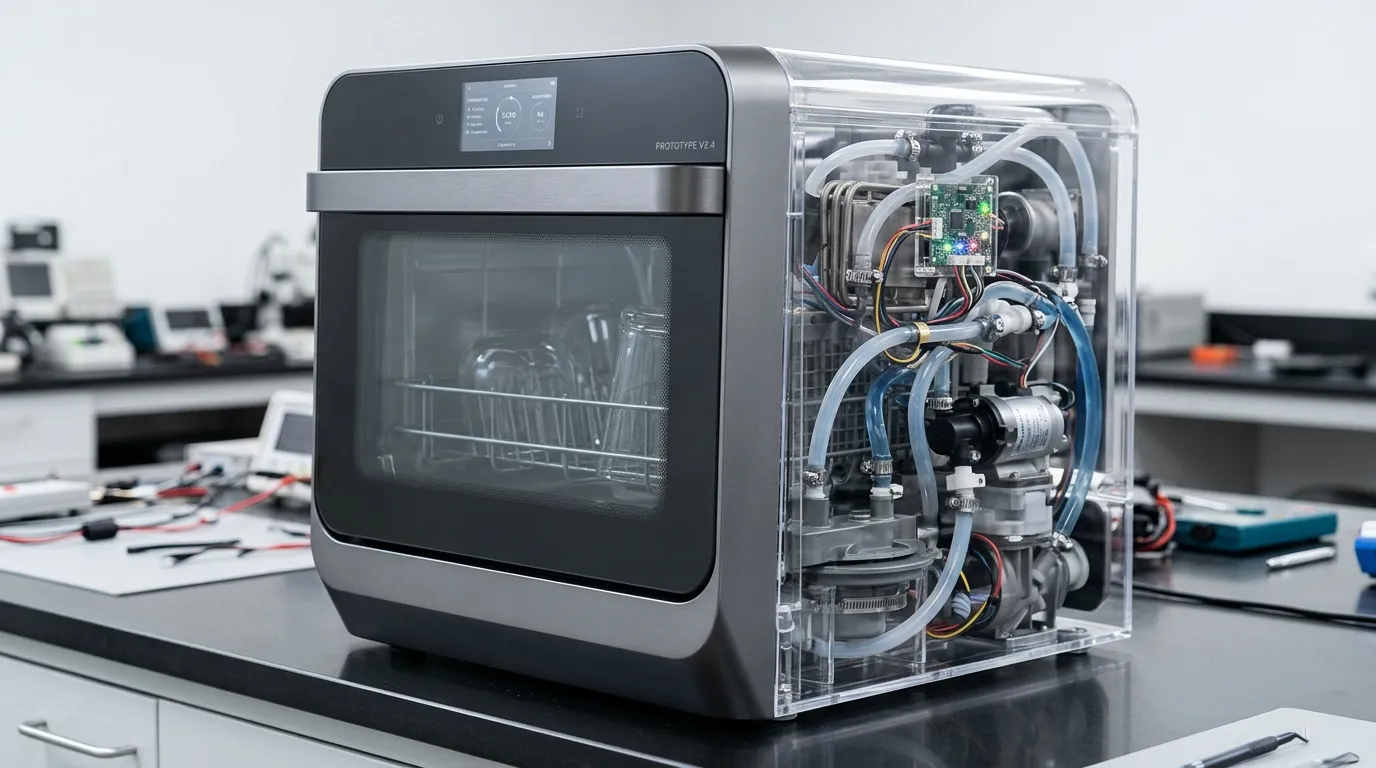
Functional Home Appliance Prototypes assist teams in locating design issues prior to investing in production equipment. A computer model cannot give the full experience of how a house feels, the movement of buttons, or how the components fit together during construction. Physical models allow engineers to experiment with clearances, material selection, airflow routes, and access to internal components.
Yanmee is a proponent of appliance projects, CNC machining, 3D printing, vacuum casting, sheet metal fabrication, finishing, and low-volume builds. The most appropriate approach is based on the part, test objective, material requirements, and quantity required. Early planning of tests allows teams to improve weak areas as changes are manageable and the development process is focused on quantifiable product requirements. It also renders design reviews more helpful.
The Importance of Functional Prototypes in the Development of Appliances
- Development of home appliance products goes beyond the design of a beautiful outer shell. Engineers should take into account internal parts, heat, airflow, wiring, fasteners, controls, and user comfort. It is possible that a product may appear right in the CAD software yet have issues with assembly.
- As an illustration, a coffee machine can have a small space to accommodate water pipes and heating components. The vacuum cleaner might require a more efficient airflow in its internal ducts. Physical models assist teams in detecting such problems prior to production tooling.
- Early checks of physical products are beneficial in the design of household appliances. Engineers are able to compare sizes, rearrange parts, and check access for repair or cleaning. These measures assist the teams in making decisions based on real parts rather than assumptions.
Selecting the Appropriate Production Process
Rapid Design Changes with 3D Printing
- 3D printing is frequently used as the beginning of Rapid Prototyping of Home Appliances. This technology is done by printing components based on computer models without special production molds. It is applicable to complicated shapes, bespoke housings, buttons, brackets, and initial assembly models.
- Fused deposition modeling (FDM) is applicable to simple models and larger parts. Stereolithography (SLA) is used to make fine details and smooth surfaces. Selective laser sintering (SLS) produces complicated nylon components that have the potential to bear numerous functional tests.
- The correct process will be based on the strength needed, surface finish, and test conditions. Printed materials might not act like the end molded plastic in heat or repeated stress.
Precision Components CNC Machining
CNC machining cuts solid plastic or metal material. It is appropriate for components requiring precise holes, mounting, threading, or consistent sizes.
- Typical uses are motor housings, support brackets, control panels, handles, and fan components. Aluminum is suitable for numerous rigid components, and engineering plastics are used in various housing and assembly applications.
- Engineers need to specify critical dimensions and tolerances prior to production of close-fitting components. Some features might be tolerated with a tolerance of ±0.1 mm, whereas other interfaces can be more tightly controlled. Real needs are based on geometry, material, and purpose.
Vacuum Casting and Sheet Metal Fabrication
- Vacuum casting is a technique that involves silicone molds to create small batches of resin parts. It may assist teams in evaluating look, surface finish, assembly, and repetitive samples of designs.
- Internal frames, mounting brackets, covers, and support structures are supported by sheet metal fabrication. Such techniques may be used with printed or machined parts in a single prototype.
- Yanmee offers vacuum casting and sheet metal fabrication to various appliance development requirements.
Selection of Material to Be Used in Functional Testing
Assign Material Properties to Parts
The material selection influences the strength, weight, heat resistance, surface quality, and component life. The choice of materials should be based on the intended test, and not on the appearance.
Common options include:
ABS plastic: It can be used in numerous appliance cases and impact checks.
Polycarbonate: This is helpful in applications where impact strength or transparency is important.
PA12 nylon: It supports complicated shapes and numerous mechanical tests.
Aluminum: Can be used in rigid brackets, mounts, and structural parts.
TPU: Can be used in flexible grips, seals, and protective features.
Function, Fit, and Assembly Testing
A clear test plan should be used to start the development of functional prototypes. The plan should detail what each component should accomplish and how the team will gauge success.
Consumer appliance prototype testing can consist of the following checks:
Dimensional check: Check holes, gaps, mounting points, and mating surfaces.
Mechanical testing: Check handles, hinges, buttons, clips, and moving parts.
Thermal testing: Test temperatures around motors, heaters, and ventilation routes.
Airflow testing: Evaluate intake and exhaust routes in vacuum devices and fans.
Checks during assembly: Check access to fasteners, cable routing, and component positioning.
Usability test: Evaluate grip, button access, cleaning, and normal operation.
Converting Engineering Feedback to Improvements in Production
Design-for-manufacturing review should be part of the appliance design and engineering prior to tooling. Wall thickness, draft angles, ribs, screw bosses, snap fits, and parting lines are checked by engineers.
- Molding may result in warping of uneven plastic walls. Improperly positioned ribs can leave sink marks, and tight tolerances can increase costs without enhancing functionality.
- Home Appliance Engineering Prototypes allow teams to view these details with physical parts. Mounting interfaces, cable openings, and internal support structures may also be evaluated using Functional Appliance Component Prototypes.
- The home appliance prototyping service provided by Yanmee also serves housing models, internal brackets, control panels, airflow components, and assembly assessment.
Applications in Household Appliances
- A prototype blender may assist the engineers in verifying the alignment of the motors, blade clearance, and fit of the housings. A vacuum cleaner model may indicate airflow limitations and dust-bin assembly problems. A prototype of an air purifier can be used to test access to filters, openings in the ventilation, and panel alignment.
- Smart-home products that have displays, sensors, buttons, and internal electronic components are also supported by Appliance Prototype Development Services.
- The development of household products is most effective when there is a defined engineering question that each prototype should answer. Teams are expected to document test results, revise drawings, and verify design changes before proceeding.
Conclusion
The next design decision should be answered by a prototype. Physical parts can be used in teams to verify dimensions, materials, assembly, airflow, and performance prior to the start of production tooling. The correct procedure will be based on the element, the test conditions, and the quantity needed.
Yanmee helps with appliance projects that are CNC machined, 3D printed, vacuum cast, sheet metal fabricated, and low-volume manufactured. Go to the home appliance prototyping service to talk about your drawings, material requirements, and testing objectives.
- PREV: Null
- NEXT: Null
Talk to the Manufacturer, Not a Middleman
Resources & Insights
-
Blog
Household Appliance Prototyping Services: From Concept to Market-Ready Products
2026-10-26By -
 Blog
Rapid Prototyping 3D Printing- Methods, Materials, Process and How to Choose
2026-10-23By -
 Blog
Sheet Metal Forming - Processes, Materials, Thickness and Design Guide
2026-10-23By -
 Blog
Low Volume Appliance Manufacturing Methods and Processes
2026-10-23By


