
 Contact Us

CNC Machining for Home Appliances and Parts


Table of Contents

CNC Machining for Home Appliances: Precision Parts and Processes
Home appliances rely on components that fit, cope with daily usage, and work well. From motor housings to mounting plates, every part should have clear design and strength requirements. CNC machining assists manufacturers in producing these parts with regulated dimensions and reproducible outcomes.
Computer numerical control (CNC) machining involves the use of programmed instructions to control cutting tools. The tools cut metal or engineering plastic until the part matches its digital design. This process favors functional prototypes, customized components, and low-volume production without special moulds.
Yanmee is a company that offers CNC machining services for home appliances for metal and plastic components. Its CNC machining service facilitates prototype development and production planning.
The Importance of Precision in the Production of Appliances
Correct Parts Enhance Assembly
Motors, bearings, shafts, seals, fasteners, and electrical components are common in appliance assemblies. Minor dimensional errors may result in inaccurate alignment, undue friction, or assembly gaps. Appliance Precision CNC Components assist in ensuring that there is a fit between components that are connected.
The tolerances must be proportional to the functions of the components. A bearing seat might require more control than a decorative cover. Using tight tolerances where necessary assists in controlling machining time, inspection work, and cost.
Reproducible Results Facilitate Production
CNC machines are controlled by programmed tool paths to produce intended shapes. After checking the setup, the identical program can generate uniform parts in a batch. The wear of tools, changes in materials, and the setup of the machine still need to be checked properly.
This repeatability assists manufacturers in comparing prototype parts to subsequent production batches. It also aids design modifications in case of any issues in the testing of the appliances. Clear drawings and inspection records are useful to put every revision in check.
Metal and Plastic Appliance Parts Materials
Household Appliances Metal Components
Aluminium alloys are lightweight, convenient in strength, and machinable. They fit housings, heat sinks, support brackets, and appearance prototypes. Stainless steel is used in applications where moisture resistance and strength are important, whereas brass is used for fittings and electrical connectors.
The choice of material must be based on heat, load, risk of corrosion, and cost. A component close to a motor might require increased heat resistance than an outer trim. Another thing that engineers should take into account is the response of the material to cutting and finishing.
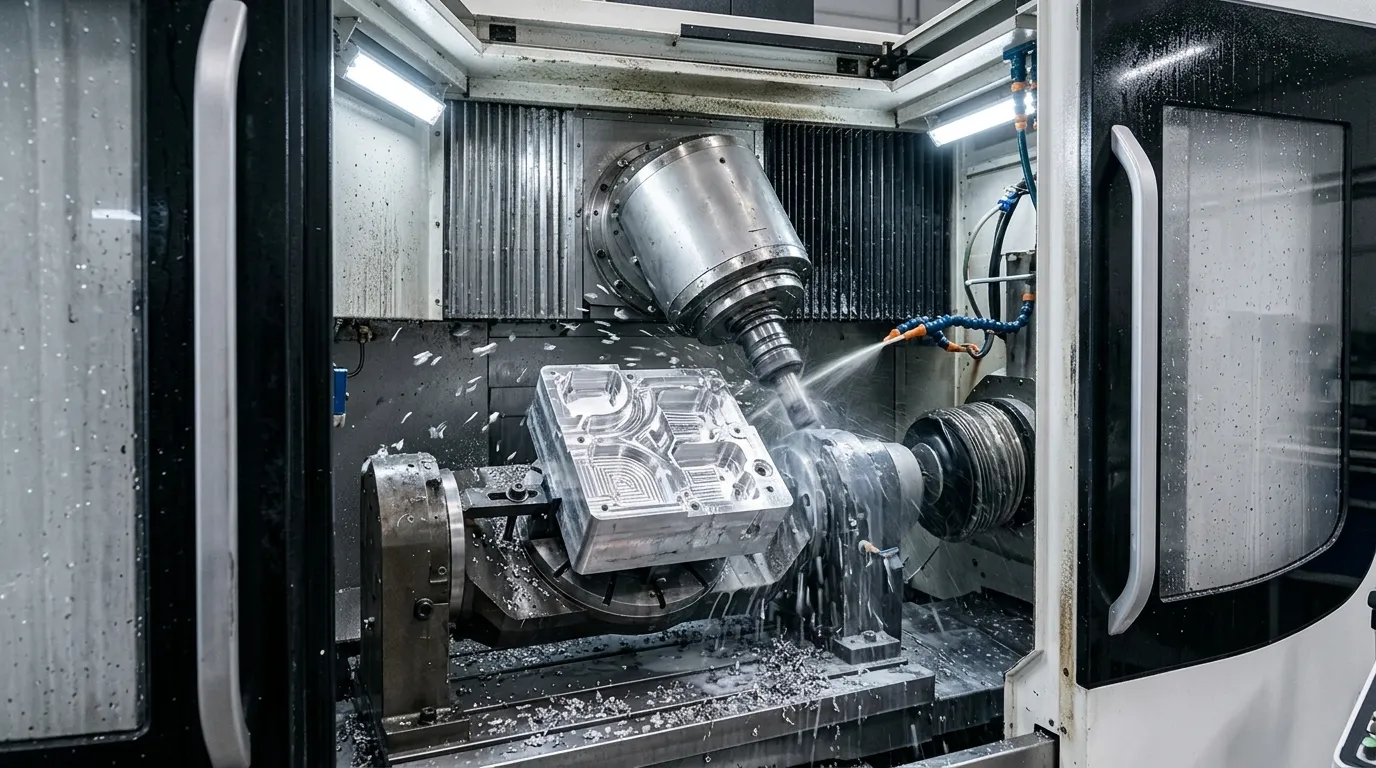
Functional Designs Plastic Parts
- Plastic engineering aids in lightweight parts, insulation, and minimal friction movement. ABS is compatible with most prototype covers, and acetal is compatible with a few gears and bushings. Nylon is a good wearable material, although moisture can cause changes in its size.
- Plastic parts can be machined by CNC machining without injection mould tooling. This assists teams in testing custom shapes prior to selection of a bigger production approach. The material limits should still be in accordance with the heat, load, and cleaning conditions of the part.
Parts Produced by CNC Machining
Precision Machining of house appliances assists in making the right enclosures for motors, controls, and internal mechanisms. The housing designs can have threaded holes, cable holes, cooling slots, and mounting features. These details should correspond to the assembly drawing and should have enough space to accommodate surrounding parts.
Custom CNC-machined brackets hold motors, pumps, fans, panels, and other appliance systems. CNC-machined mounting plates offer solid mounting points for internal assemblies. Before approving any design, engineers are supposed to check the spacing of holes, the thickness of the wall, and the load requirements.
Other typical components are:
- Motor and gearbox housings of internal drive systems.
- User controls such as handles, knobs, and precision buttons.
- Cooling systems, fan supports, and airflow.
- Mounting components and internal support frames for heating.
- Test fixtures and product development tools.
Appliance Prototyping CNC Machining
CNC Machining of Appliance Prototypes assists engineers in testing actual materials and precise part characteristics. Machined parts may reuse the same metal or plastic that will later be used in a print model, unlike some of the printed models. This assists teams in evaluating fit, strength, and assembly requirements in the development process.
Custom Appliance Parts Machining also allows design changes without special moulds. Manufacturers are able to update holes, mounting points, or surface details prior to ordering larger quantities. This method is applicable to projects that require functional testing or small batches of production.
Tolerances, Finishes and Quality Checks of Appliances
Tight Tolerance CNC Machining finds application in bearing seats, shaft fits, and aligned mounting holes. The accuracy needed is determined by material, part geometry, and machine set-up and inspection techniques. Yanmee enumerates tolerances as low as ±0.01 mm for appropriate projects, but limited to design and process tolerances.
- Surface Finishing of CNC-machined parts may be used to enhance appearance, corrosion resistance, or surface texture. There are options of anodising an aluminium, bead blasting to achieve a matte finish, polishing to achieve a smoother surface, and powder coating to provide surface protection. The proper finish is determined by material and the working conditions of the part.
- Quality checks can be done with callipers, micrometers, thread gauges, or coordinate measuring machines. Critical dimensions and approved drawing requirements should be inspected. This assists manufacturers in identifying mistakes before components are incorporated into the final assembly.
Prototype Builds to Low-Volume Production
- CNC Machining in Low-Volume Production assists teams to produce small batches prior to increasing production. It facilitates pilot builds, design checks, and repeat orders at no cost of special moulds. Appliance Parts CNC Manufacturing also has the ability to mix machining with other processes in case a design requires other types of parts.
- To get a proper quote, have your CAD model, technical drawing, material selection, quantity, and tolerance requirements and finish needs ready.
Yanmee provides CNC machining services including design review, multi-axis machining, and inspection services. Its prototyping service for home appliances can assist a team in examining more comprehensive prototype requirements.
Conclusion
The design of good appliances relies on parts that fit, last, and do as they are designed to. Both cost and function are controlled with the help of the right machining process, material, tolerance, and finish. Custom Precision Component Manufacturing also provides product teams with space to test designs prior to production on a large scale.
Get in touch with Yanmee CNC machining service to talk about your drawings and component requirements. Share your material, quantity, and critical dimensions to help the team assess a suitable manufacturing route.
- PREV: Null
- NEXT: Null
Talk to the Manufacturer, Not a Middleman
Resources & Insights
-
Blog
Household Appliance Prototyping Services: From Concept to Market-Ready Products
2026-10-26By -
 Blog
Rapid Prototyping 3D Printing- Methods, Materials, Process and How to Choose
2026-10-23By -
 Blog
Sheet Metal Forming - Processes, Materials, Thickness and Design Guide
2026-10-23By -
 Blog
Low Volume Appliance Manufacturing Methods and Processes
2026-10-23By


