
 Contact Us

Home Appliance Prototype Manufacturing: A Guide


Table of Contents

Home Appliance Prototype Manufacturing: From Design to Testing
A new home appliance should be functional prior to being taken to the production line. Its components must be fitting, durable for everyday use, and address definite safety requirements. Preliminary prototypes assist engineers in experimenting with these specifications prior to investing in expensive equipment or mass production.
Home Appliance Prototype Manufacturing converts product ideas into physical parts to be reviewed and tested. It assists teams in evaluating shape, material selection, assembly, and functionality, with changes being simpler to implement. The process promotes products like refrigerators, washing machines, kitchen appliances, air conditioners, and vacuum cleaners.
We provide a point of entry to teams that consider home appliance manufacturing and prototyping services. Product teams can identify design problems at the right time and stock parts to be used at a later stage by selecting appropriate methods and materials.
The Importance of Home Appliance Prototyping
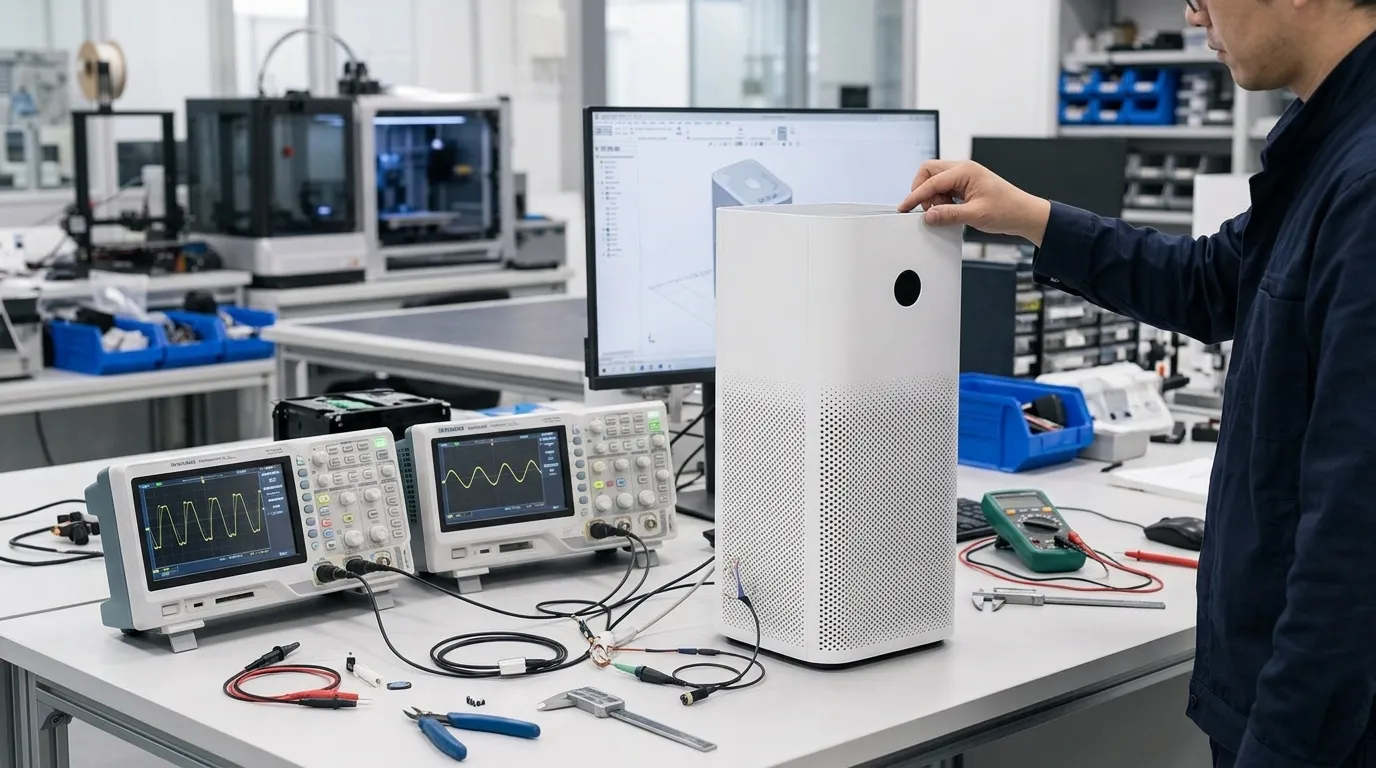
Computer-aided design (CAD) models demonstrate the appearance of a part, yet physical tests demonstrate problems that cannot be completely displayed on a screen. A prototype may reveal poor fit, weak mounting points, awkward assembly, or parts that collide during movement.
For example, a part of a washing machine can appear right in a CAD but vibrate when loaded. A physical model allows engineers to test clearances, mount strength, and serviceability. Early correction of these problems can help to minimize the rework once production has started.
Primary Technologies of Producing Prototypes of Appliances
The 3D printing technique is a digital model that is created in layers. It is appropriate for initial design inspection, shape inspection, and selected functional tests where the material that is selected matches operating requirements.
Fused deposition modelling (FDM) involves the use of melted plastic filament to create each layer. It is efficient in simple housings, covers, clips, and fit-check designs. Stereolithography (SLA) involves using light to cure liquid resin to create smooth surfaces and fine details. Selective laser sintering (SLS) is a process that combines polymer powder and is able to produce complex components without support structures.
Appliance Prototyping CNC Machining
CNC machining is a process of cutting a solid block with programmed cutting tools. It is applicable to components that require precise dimensions, robust materials, or surfaces that are compatible with production components.
CNC milling produces slots, pockets, flat faces, and intricate shapes. CNC turning is used to make round parts like shafts, pins, bushings, and spacers. These processes help produce metal and engineering plastic components in appliance assemblies.
Machining tolerances are based on material, geometry, tool access, and setup. A cover can be tolerated generally, whereas a shaft or bearing seat might require closer control. Instead of enforcing strict tolerances on all features, engineers are supposed to mark important dimensions.
Appliance Prototyping Sheet Metal
Sheet metal prototyping involves the production of parts using thin metal sheets by cutting, bending, punching, etc. It fits brackets, support panels, equipment covers, and internal frames.
The typical materials are aluminium, stainless steel, and mild steel. The correct decision is based on weight, corrosion risk, stiffness, and cost. When preparing parts, designers should consider bend radius, sheet thickness, hole spacing, and springback.
A prototype constructed using these techniques assists the teams to verify panel fit and assembly access. It can also show sharp edges, weak bends, or gaps that require correction prior to production.
Selecting Materials to Use in Custom Appliance Prototypes
Plastic Prototype Manufacturing
Plastic Prototype Manufacturing is used to aid lightweight components and intricate forms without necessarily having a complete injection mould. ABS is compatible with most covers and housings, whereas polycarbonate has good impact resistance. Acetal is suitable for use in the chosen moving parts due to its low friction and high dimensional stability.
The choice of material must be based on the heat, load, moisture, and cleaning conditions of the appliance. Nylon has the ability to absorb water, and this can alter its size. Certain printed plastics can also be softened at the temperatures that can be found in the vicinity of motors or heating components.
Metal Prototype Manufacturing
Metal prototypes assist engineers in testing strength, stiffness, heat transfer, and fit under actual loads. Alloys like 6061 are aluminium alloys that are simple to machine and provide a convenient strength-to-weight ratio. Grades of stainless steel like 304 are used in parts that are exposed to moisture and cleaning.
Steel can be appropriate where it is important to have increased stiffness or wear resistance. But the final decision can be influenced by added weight and corrosion protection. Instead of choosing materials based on cost, engineers need to evaluate them based on the working conditions of the part.
Construction of Prototypes of Functional Appliances
Functional Appliance Prototypes are not merely visual models; they are tested to move or work. Depending on the design, they may include working hinges, fan mounts, pump fittings, motor supports, or control panel parts.
A functional model can be used to evaluate:
- Assembly by fitting parts together.
- Motion, friction, and clearance of moving components.
- Heat effects on nearby materials and components.
- Vibration of motors, fans, and rotating shafts.
- Repair and wiring and routine maintenance access.
The testing must be in line with the purpose of the prototype. A model that has been designed to be checked on fit might not be appropriate for electrical or heat testing. The teams are advised to document the limits of every test and not to take the initial results as evidence of complete product safety.
Appliance Housing Prototypes and Assembly Checks
Appliance Housing Prototypes contain and safeguard internal components as the external shape of the product is formed. They should be designed in such a way that they accommodate wiring, fasteners, vents, seals, and control systems. An ill-fitting housing may lead to delays in assembly or prevent airflow.
Wall thickness, mounting points, snap fits, and screw bosses should be checked by engineers. Thin walls can be bent, and bosses poorly placed may crack during fastening. Components close to heat sources might require increased clearance or a higher heat-rated material.
A prototype also assists teams to examine the look and feel of the product. Before final tooling, surface texture, panel gaps, location of handles, and access to controls can be evaluated.
Household Appliances Prototype Testing
Household Appliances Prototyping should have a clear plan depending on the intended use of the part. The engineers are able to verify dimensions, fit, load, airflow, vibration, and heat exposure as necessary. The results of the tests must be documented to enable the team to compare design versions and trace the changes.
Complex shapes and critical dimensions can be checked with a coordinate measuring machine (CMM). Callipers and micrometers are applicable to most simple size checks, and gauges are used to check holes and threads. The inspection process must be appropriate to the necessary accuracy and geometry of parts.
Appliance Design Validation must also have a clear picture of what each prototype can demonstrate. A housing model can verify fit and appearance, but cannot alone verify electrical safety. The appropriate test equipment, qualified personnel, and the applicable safety standards may be needed to conduct full product testing.
Transitioning to Small Production Runs
Pilot Builds Home Appliances Prototype Manufacturing may result in pilot builds once the design has passed its critical inspections. Low-volume production assists teams to check assembly time, part consistency, finish quality, and supply requirements prior to scaling up.
The correct process relies on the quantity, material, and design modification. CNC machining is suitable for fine parts, whereas 3D printing assists in testing corrected forms. Vacuum casting is capable of holding small batches of plastic-like components, and injection moulding can be used on larger batches once the design is stable.
To plan the project, provide the proposed use, CAD files, drawings, material requirements, finish, and target quantity. Such information assists the manufacturing department to evaluate tooling, tolerances, inspection requirements, and probable cost.
Conclusion
A prototype sound assists teams to identify design flaws before they turn into expensive manufacturing issues. Home Appliance Prototype Manufacturing facilitates superior decision-making by conducting physical fit checks, material tests, and scheduled testing. The correct process is determined by the part, the test objective, and the volume of production needed.
Contact Yanmee via its home appliance prototyping service to talk about your CAD files, material options, and prototype requirements. An effective brief provides the engineering team with a better foundation on which to advise the next step.
- PREV: Null
- NEXT: Null
Talk to the Manufacturer, Not a Middleman
Resources & Insights
-
Blog
Household Appliance Prototyping Services: From Concept to Market-Ready Products
2026-10-26By -
 Blog
Rapid Prototyping 3D Printing- Methods, Materials, Process and How to Choose
2026-10-23By -
 Blog
Sheet Metal Forming - Processes, Materials, Thickness and Design Guide
2026-10-23By -
 Blog
Low Volume Appliance Manufacturing Methods and Processes
2026-10-23By


